Asphalt edge repair in Nova Scotia starts with understanding why the driveway is breaking apart. A crumbling edge can result from more than surface wear. Unsupported shoulders, water movement and vehicle loading may all contribute, so simply covering the broken area may not solve the problem.
Why edges need support
The outside of a driveway has less surrounding pavement to distribute loads. When a vehicle repeatedly drives close to an unsupported edge, the asphalt can crack or break away. Soft ground alongside the driveway can make the problem worse, especially where water collects.
Look at how the driveway is used. Delivery vehicles, trailers and regular parking positions may place loads where the pavement was not intended to carry them. Document those patterns so a contractor can consider them when recommending a repair.
Check where water goes
Runoff flowing along the edge can erode adjacent material. Downspouts or poorly graded ground may direct water toward a vulnerable area. A lasting repair should consider the drainage path as well as the visible asphalt damage.
Take photographs after rain and compare the affected edge with a sound section. Do not add material that traps water against the driveway or redirects runoff onto a neighbouring property. Changes to grading deserve proper assessment.
Different damage needs different work
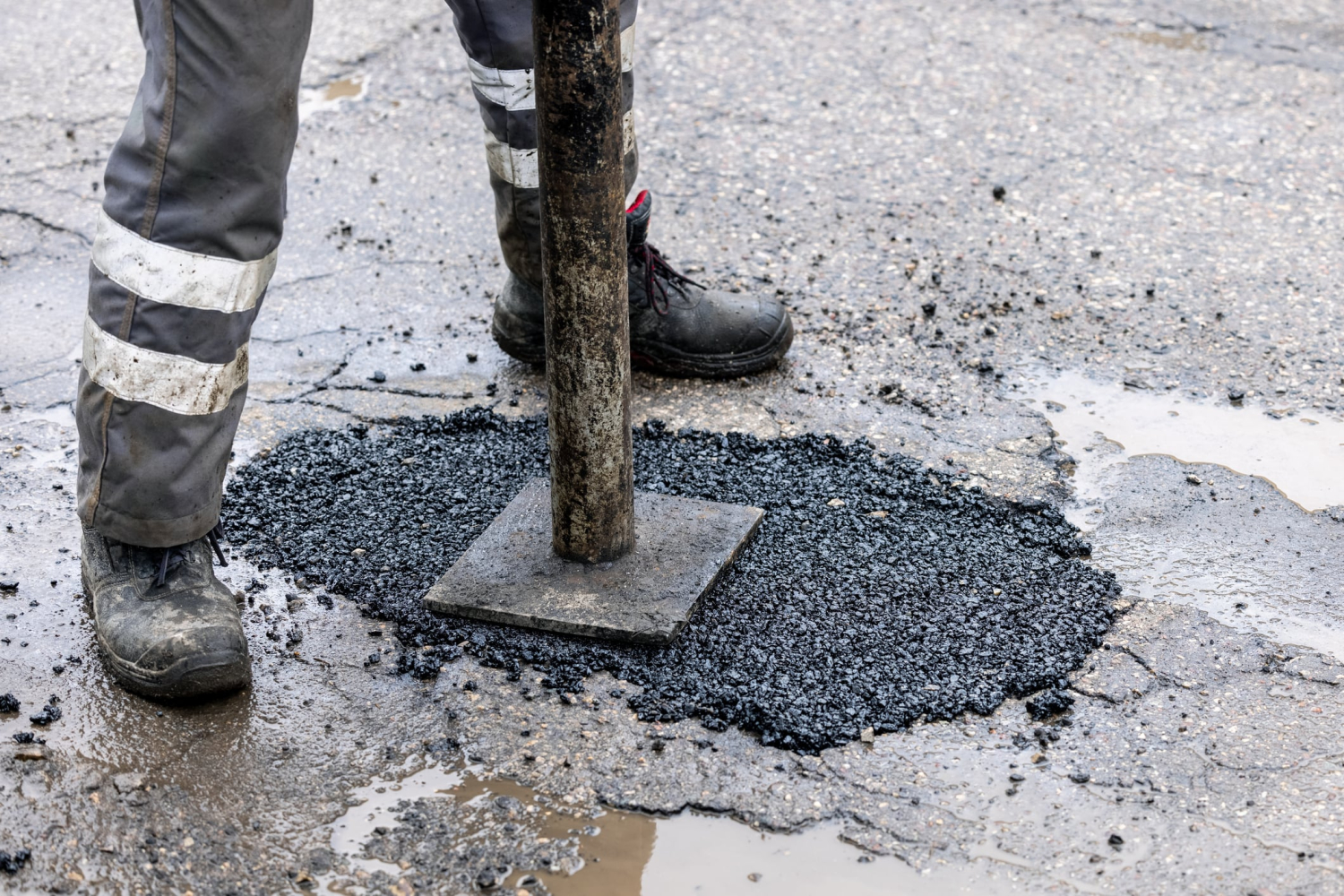
A small, stable crack near the edge may call for a different approach from a strip of broken pavement with soft material beneath it. Where support has failed, repair may involve removing damaged asphalt and rebuilding the affected area before placing replacement pavement.
A surface coating will not recreate structural support. Likewise, sealing a crack does not correct settlement. Ask the contractor what caused the damage, which material will be removed and how the repaired edge will be supported.
Reduce repeat damage
- Avoid parking heavy vehicles on damaged edges.
- Keep wheels on the sound, supported portion of the driveway.
- Review snow-clearing routes before winter.
- Keep drainage paths clear without undermining the shoulder.
- Monitor the repair after rainfall and seasonal changes.
Plan access and appearance
Local repairs can differ in colour and texture from older asphalt. Confirm the repair limits in advance and ask whether the surrounding area is likely to need attention later. A wider repair may be more practical if deterioration extends beyond what is obvious at the surface.
For asphalt edge repair in Nova Scotia, explore Supreme Asphalt’s paving and asphalt repairs. Contact the team with photos of the edge and nearby drainage so the assessment can address both the damaged pavement and its underlying support.