A spring asphalt inspection gives Nova Scotia homeowners and property managers a clearer picture of what winter left behind. Once snow has cleared and the pavement is safe to walk, a simple condition review can help separate routine upkeep from repairs that need a contractor.
Inspect once wet and once dry
Start with a walk around the site in dry conditions. Note open cracks, loose aggregate, potholes, crumbling edges and changes in surface level. Then observe the area after rain from a safe location. Recurring puddles can reveal drainage issues that are easy to miss when everything is dry.
Use photographs and a rough site sketch to record locations. Repeating photographs from the same position makes changes easier to track. Do not judge the entire pavement by colour alone: a dark surface can still have structural problems, while a faded surface may remain serviceable.
Check high-stress areas first
- Turning areas and vehicle entrances.
- Driveway edges beside soft ground.
- Locations around catch basins and utility covers.
- Low spots where snowmelt collected.
- Previously repaired areas showing new movement.
Recognize different repair needs
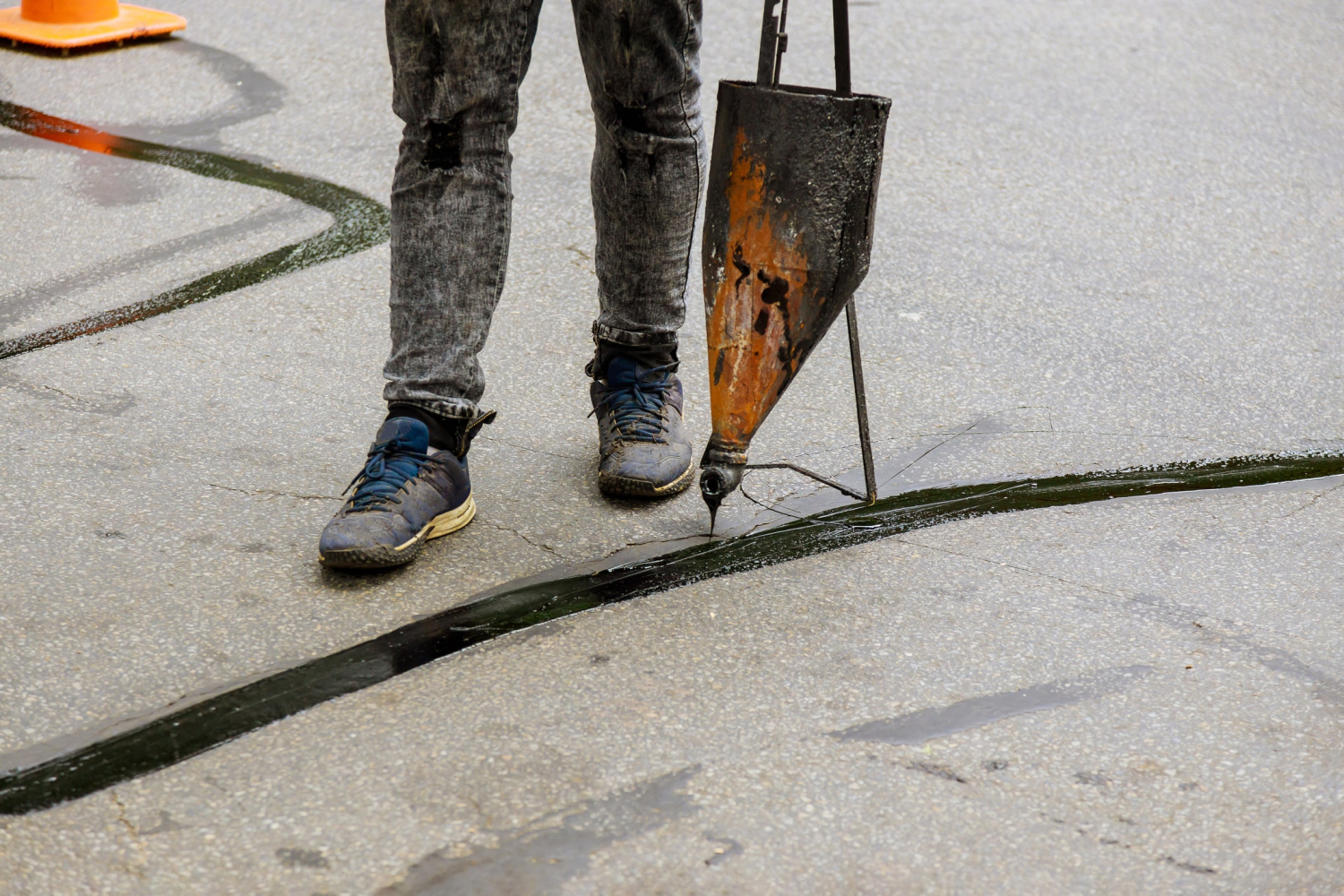
An isolated crack in otherwise sound pavement may be suitable for sealing. Interconnected cracking, movement or a sunken area can indicate a deeper problem. Filling every visible opening with the same product is unlikely to address those differences.
For commercial properties, inspect markings and pedestrian routes as well as the pavement itself. Faded lines can make an otherwise usable lot harder to navigate. Repair work should be coordinated before repainting so new markings are not immediately disturbed.
Create a prioritized action list
Begin with defects that affect safe access, followed by drainage and deterioration that may spread. Keep cosmetic improvements separate so they do not consume the budget needed for corrective work. Ask a contractor to explain whether the work addresses the cause, the symptom or both.
Spring conditions can vary. Even after the surface looks dry, underlying material may still be wet or unstable. Allow the contractor to assess readiness and specify a suitable repair window rather than choosing solely by the calendar.
Turn your inspection into a plan
A short written record helps you compare quotations and communicate exactly which areas need attention. Keep it with previous repair invoices and update it after the work. This makes the next spring asphalt inspection more useful.
Review Supreme Asphalt’s paving and asphalt repair services or request an assessment for your Nova Scotia driveway or parking lot.